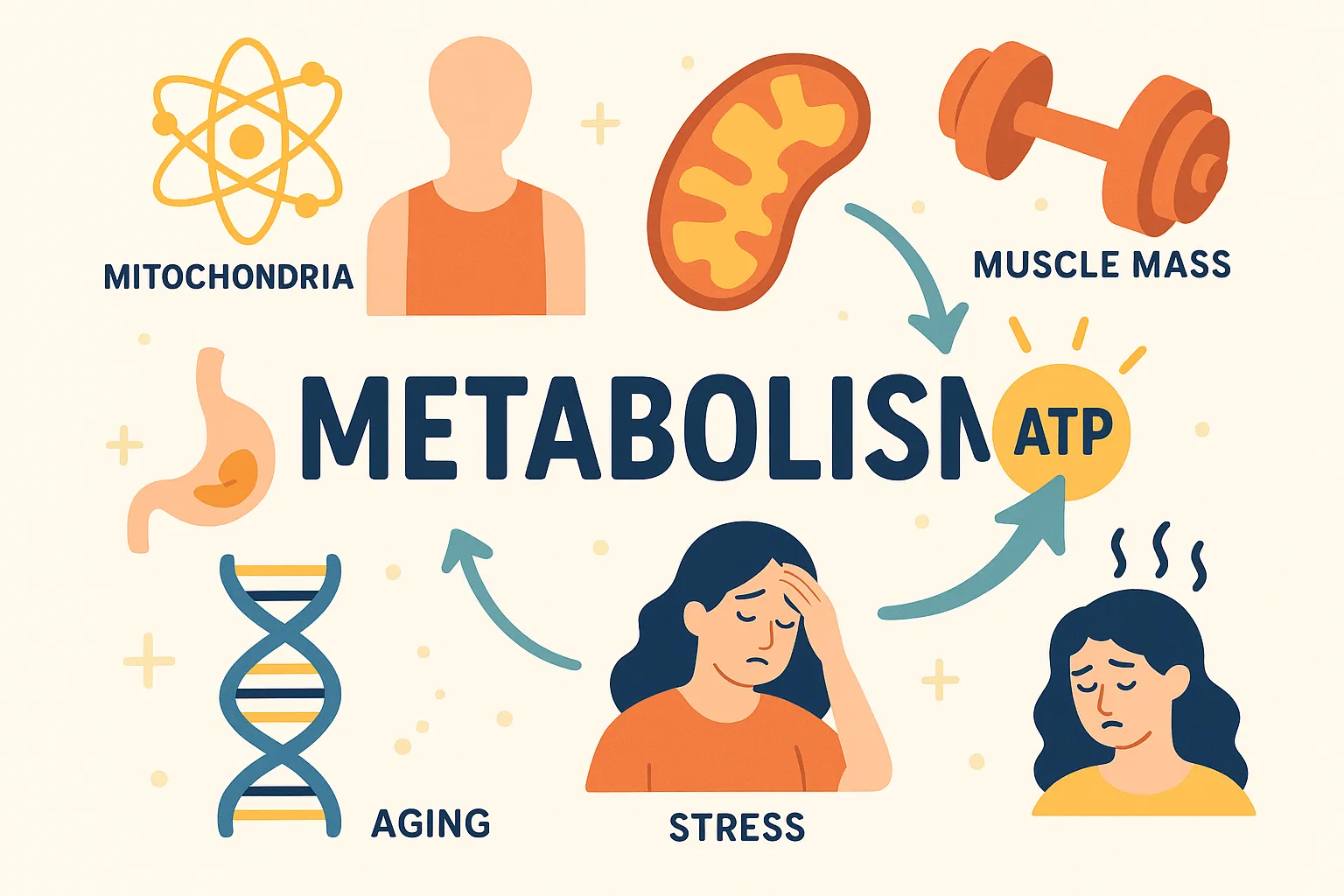
Understanding Metabolism: The Engine Behind Your Energy
Metabolism is often described as the body’s “engine.” It determines how efficiently you convert food into usable energy. But many people notice that as they age, lose muscle, or deal with chronic stress, their energy levels drop while weight gain becomes easier. It leads to a common question: is my metabolism slowing down?
The short answer is: yes — but usually not for the reason people think. Modern research shows that metabolic decline is a combination of biological aging, lifestyle patterns, hormonal shifts, loss of lean muscle, and mitochondrial efficiency.
How Your Metabolism Changes With Age
For decades, people believed metabolism plummets in your 30s. But a landmark study published in the journal Science showed that metabolism stays surprisingly stable until around age 60. However, energy expenditure begins to shift long before that — mostly because of muscle loss and changes in cellular efficiency.
Key changes include:
- Reduced mitochondrial activity – your cells produce energy less efficiently.
- Decrease in muscle mass – muscle burns more calories than fat, even at rest.
- Hormonal fluctuations – thyroid, cortisol, estrogen, and testosterone all influence metabolism.
- Lower daily movement – small reductions in physical activity compound over time.
The combination of these factors often feels like “slow metabolism,” even if your basic metabolic rate hasn’t technically collapsed.
Signs Your Metabolism May Be Slowing
You may be experiencing metabolic slowdown if you notice:
- Low daily energy or mid-day crashes
- Weight gain even with the same diet
- Difficulty burning fat
- Feeling cold often
- Slow digestion or bloating
- Brain fog or lack of focus
These signs are usually linked to cellular energy efficiency—not just calories in vs. calories out.
The Role of Mitochondria in Energy and Metabolism
Your mitochondria are the tiny “energy factories” inside each cell. They convert nutrients into ATP (your body’s usable fuel). When mitochondria become less efficient, everything feels harder — from thinking clearly to burning calories.
Research shows mitochondrial slowdown can be caused by:
- Oxidative stress
- Inflammation
- Poor sleep quality
- Nutrient deficiencies (especially B-vitamins, magnesium, and antioxidants)
- Chronic stress or cortisol imbalance
Strengthening mitochondrial function can therefore have a meaningful effect on energy levels, fat oxidation, and overall vitality.
What Science Suggests You Can Do to Support a Healthy Metabolism
1. Increase Lean Muscle Mass
Muscle is the number one metabolic driver. Even a small increase in lean mass dramatically improves the number of calories you burn at rest.
Simple actions:
- 2–3 sessions of strength training per week
- Bodyweight exercises for beginners (squats, planks, push-ups)
- Gentle resistance bands for low-impact training
2. Improve Sleep Quality
Poor sleep disrupts hormones that regulate metabolism — especially leptin, ghrelin, and cortisol. Studies consistently show that people who sleep 6 hours or less tend to gain more weight and feel lower energy.
Try:
- A consistent sleep schedule
- Limiting screen time 1 hour before bed
- Keeping your room cool and dark
3. Support Your Mitochondria
Improving mitochondrial efficiency can naturally boost how your body converts food to energy.
Habits that help:
- Eating antioxidant-rich foods (berries, leafy greens)
- Prioritizing whole-food nutrition
- Staying hydrated throughout the day
- Gentle daily movement: walking, stretching, light cardio
4. Manage Stress & Cortisol Levels
Chronic stress leads to elevated cortisol, which is linked to belly fat, sugar cravings, and slower metabolic function. Even short relaxation habits can help rebalance your system.
Options:
- Breathing exercises
- Journaling
- Short 10-minute meditations
- Outdoor walks
Is It Possible to “Reboot” Your Metabolism?
Metabolism is not permanently fixed. Numerous studies indicate that cellular energy production, mitochondrial function, and metabolic flexibility can improve with targeted lifestyle changes.
The process isn’t about quick fixes — it’s about supporting your body’s natural systems so they work the way they were meant to.
The Bottom Line
If you’ve been feeling low energy, struggling with stubborn weight, or noticing metabolic slowdown — you’re not alone. These issues are often a natural combination of aging physiology, stress, nutrient gaps, and lifestyle patterns.
The good news is that metabolism is highly adaptable. With the right daily habits and science-backed strategies, many people can support better energy, clearer focus, and a more efficient metabolic rhythm.
Your metabolism is not “broken.” It simply needs the right environment to function at its best.
See how people combine habits with additional metabolism support
Some adults feel that improving sleep, movement and nutrition is only part of the story. Others also choose to learn about targeted supplements that are designed to support healthy metabolic function.
If you'd like to hear that approach explained in detail, there is a scientific-style presentation that walks through the idea, the background and how it's meant to be used.